
The Ultimate Guide to Logo Design in 2026
Jan 29, 2026
Why Logo Design Matters More Than Ever
Many small business owners make the mistake of treating their logo as an afterthought. They might use a generic free logo maker and call it a day. However, in a saturated market, "good enough" is no longer enough.
1. It Grabs Attention
We live in a distraction economy. You have approximately two seconds to convince a potential customer to stay on your website. A dynamic, professional logo solidifies your presence instantly.
2. It Fosters Brand Loyalty
Think of the Nike Swoosh or the Apple apple. These aren't just shapes; they are promises of quality. A consistent brand identity builds a connection that turns first-time buyers into lifelong advocates.
3. It Separates You from the Competition
If your competitor has a generic, clip-art style logo and you have a bespoke, minimalist logo that speaks to your niche, you automatically win the trust battle.
Top Logo Design Trends for 2025
Design is fluid. What worked in 2010 looks dated today. To ensure your brand looks modern and relevant, keep an eye on these emerging 2025 logo design trends.
The Rise of "Motion-First" Logos
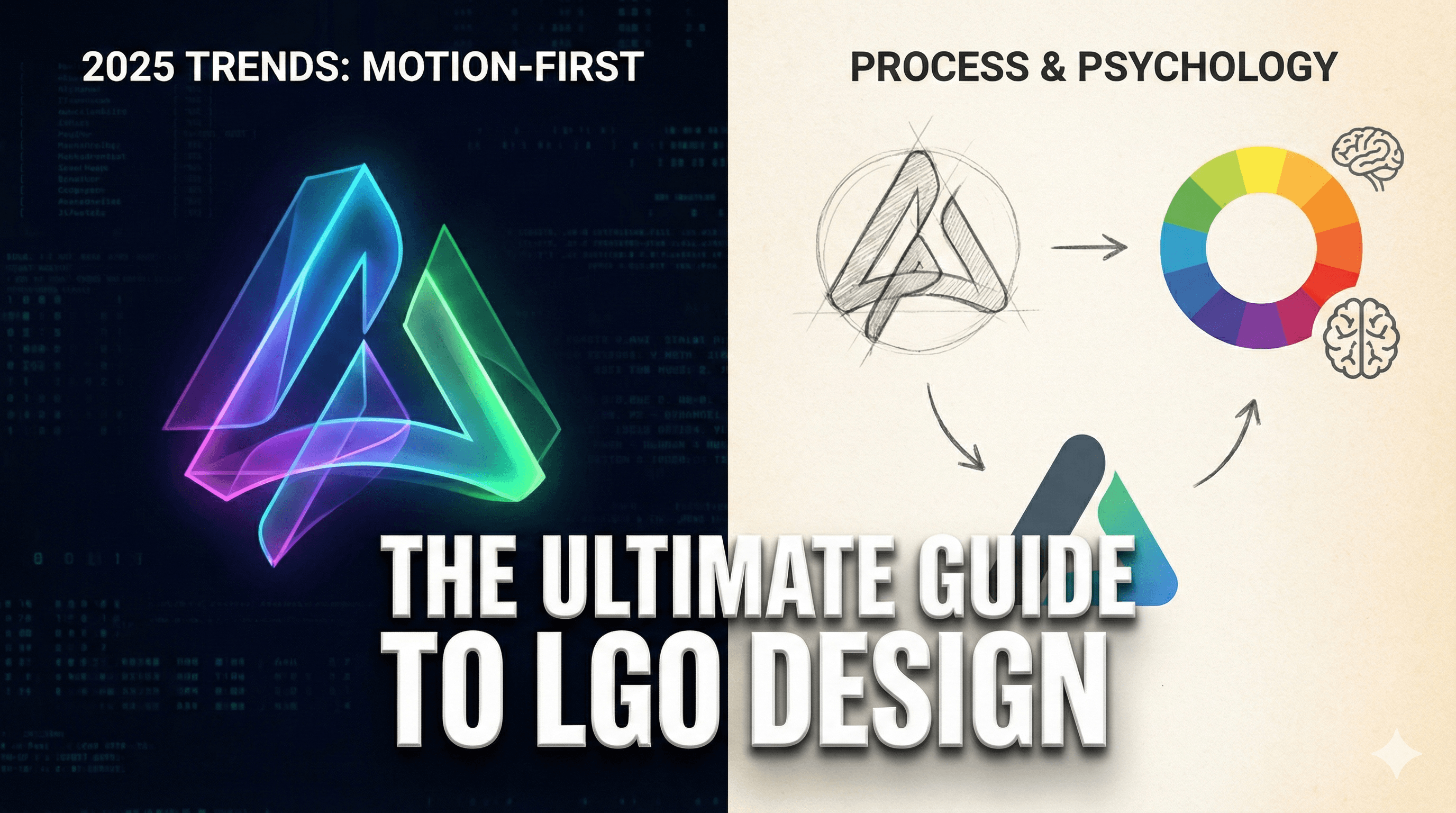
With the dominance of TikTok, Instagram Reels, and digital billboards, static logos are becoming a thing of the past. Motion-first logos are designed with animation in mind—shifting shapes, bouncing letters, or rotating icons that catch the eye on a screen. Even if you print it on a business card, the digital version should be alive.
Eco-Conscious and Organic Aesthetics
Sustainability is no longer a buzzword; it’s a business requirement. Brands are moving toward earthy tones—deep greens, terracottas, and browns. We are seeing a rise in hand-drawn, "imperfect" lines that suggest human craftsmanship rather than cold, corporate precision.
Retro Nostalgia (90s and Y2K)
Nostalgia is a powerful marketing tool. The bold, bubble letters and vibrant neon colors of the late 90s and early 2000s are making a massive comeback. This aesthetic appeals heavily to Gen Z and Millennials, evoking a sense of comfort and fun.
Rounded Sans-Serif Fonts
For tech companies and startups, the sharp, aggressive edges of the past are being replaced by rounded sans-serif fonts. This typography style feels friendly, approachable, and safe—perfect for brands in finance or healthcare trying to build trust.
The Psychology of Color and Shape
Before you sketch a single line, you must understand the psychological triggers behind visual elements. A professional logo designer doesn't just pick colors they "like"; they pick colors that work.
Color Psychology Cheat Sheet
Blue: Trust, security, and calm. (Used by: Banks, Social Media platforms).
Red: Energy, passion, and urgency. (Used by: Fast food, Clearance sales).
Green: Health, money, and nature. (Used by: Whole Foods, Finance apps).
Black: Luxury, exclusivity, and mystery. (Used by: High-end fashion, Automotive).
Yellow: Optimism, clarity, and warmth. (Used by: Construction, Tech).
Shape Meanings
Circles: Unity, community, and friendship.
Squares/Rectangles: Stability, balance, and reliability.
Triangles: Power, direction, and masculinity.
The Step-by-Step Logo Design Process
Whether you are hiring a graphic designer or attempting a DIY approach, the workflow remains the same. Here is how a concept becomes a reality.
Step 1: The Discovery Phase
This is the research stage. You need to answer critical questions:
Who is your target audience?
What are your competitors doing?
What three adjectives describe your brand? (e.g., Modern, Luxurious, Fast).
Step 2: Sketching and Conceptualization
Never start on the computer. Start with a pencil and paper. Sketching allows for rapid brainstorming without getting bogged down by software tools. Focus on the silhouette—a great logo should be recognizable even when it is black and white and the size of a stamp.
Step 3: Digital Drafting (Vectorization)
Once you have a solid sketch, it’s time to digitize. Professional designers use vector software like Adobe Illustrator. Unlike standard images (JPEGs), vector logos are mathematical formulas. This means they can be scaled up to the size of a billboard or down to a favicon without losing quality.
Step 4: Refinement and Typography
Choosing the right font is just as important as the icon. Make sure the font is legible at small sizes. Adjust the "kerning" (the space between letters) to ensure the text feels balanced and airy.
Step 5: Color Applications
Test your logo in black and white first. If it doesn't work in monochrome, it won't work in color. Once the form is perfect, apply your brand color palette based on the psychology we discussed earlier.
DIY vs. Hiring a Pro: What’s Right for You?
The DIY Route
Pros: Cost-effective; immediate results. Cons: Lack of originality; trademarking issues; generic templates. Best for: Hobby blogs, temporary projects, or testing a concept.
Hiring a Professional Agency
Pros: Custom logo design unique to your brand; legal ownership; full brand style guide. Cons: Higher upfront investment; longer turnaround time. Best for: Serious businesses, startups seeking funding, and rebranding efforts.
Common Logo Mistakes to Avoid
Overcomplicating the Design: Simplicity is key. A logo with too many details will turn into a smudge when printed on a pen or viewed on a mobile phone.
Following Trends Too Blindly: While it is good to be modern, don't chase a trend that will die in six months. Aim for timelessness.
Using Raster Images: Never design a logo in Photoshop. Always use vector formats (.EPS, .AI, .SVG) to ensure your brand assets are future-proof.
Conclusion
Your logo is the face of your business. It is the first thing people see and the last thing they remember. By investing time in high-quality logo design, you are investing in the longevity and perceived value of your company.